
Why Tilt-and-Turn Aluminum Windows Keep Growing
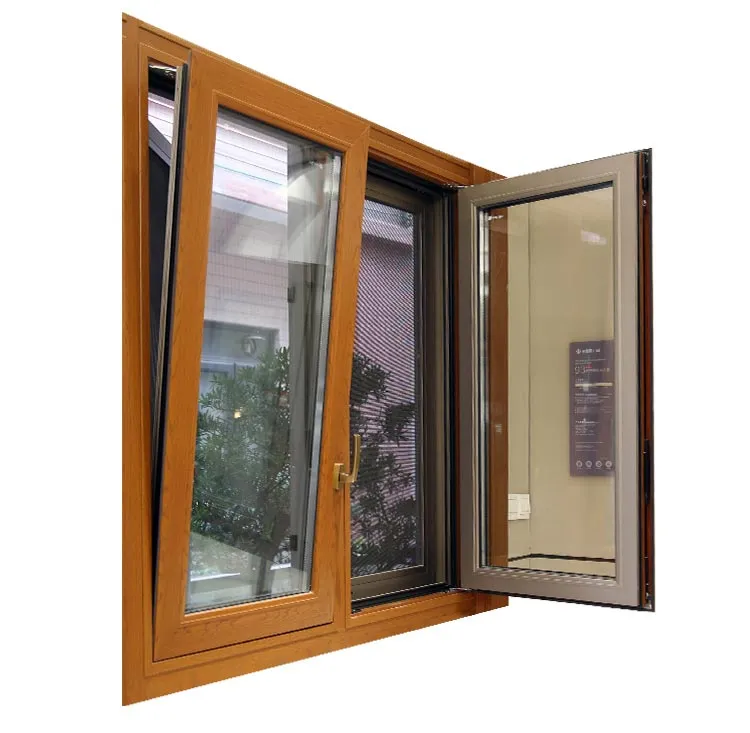
A tilt-and-turn window does two things with one sash. Turn the handle one way and the sash swings inward like a casement, hinged on the side. Turn it the other way and the sash tilts inward at the head, hanging on bottom hinges. The same handle, the same gasket, two completely different ventilation behaviours. That mechanical economy is why the type has spread across Europe and is now the default residential window in a growing number of markets.
The two modes solve two different problems
The tilt mode gives secure ventilation. The opening at the head is narrow enough that a person cannot pass through, which makes it usable on a ground floor or in a rental property where a fully open casement is a security concern. Rain penetration is limited because the opening faces downward and the sash acts as a deflector. The turn mode gives full opening for cleaning the exterior glass from inside, which on an upper floor removes the need for a ladder or a rope access team.
That second point is underrated in commercial specification. On a building where the windows cannot be reached from outside, the ability to clean both faces from the interior changes the maintenance contract, not just the convenience.
Why aluminum rather than PVC
The tilt-and-turn mechanism originated in PVC systems, where the profile is deep enough to conceal the hardware. Aluminum systems achieve the same function with narrower sightlines and much greater structural capacity, which matters as unit sizes grow. A thermally broken aluminum tilt-and-turn can carry a much larger sash than a PVC equivalent at the same wind load, and it holds a factory finish that does not chalk in UV.
What the hardware has to do
This is where the type earns or loses its reputation. A tilt-and-turn window needs a multi-point locking system, a tilt-and-turn gear, corner drives and a restrictor, and all of it must act on a sash that is being asked to do two things. Three specification points matter:
- Load rating at least 1.5 times the actual sash weight, with a cycle rating of 100,000 operations or more.
- A restrictor or limiter on the turn mode where the window is exposed, because a fully open sash caught by wind transfers the load straight into the hinges.
- A drainage path in the bottom frame that stays clear when the sash is in tilt mode, since water can collect in the lower rebate.
Where it is not the right window
Tilt-and-turn swings inward, so it cannot be used where furniture, a radiator or a walkway occupies the interior swing. It is a poor choice for a balcony door in a cold climate unless the threshold and drainage are designed carefully, because the inward swing and the low threshold fight each other. And on a very large opening, a single tilt-and-turn leaf becomes heavy; a lift-and-slide or a fixed-plus-casement arrangement is the better engineering answer.
The performance question
A tilt-and-turn window seals by compression in the turn mode and by gasket contact in the tilt mode, which means its air and water performance in the tilted position is lower than when closed. That is normal and expected: the tilted position is for ventilation, not for weather resistance. The figures that should be quoted are for the closed position, from a tested assembly.
If you are considering tilt-and-turn for a project, send the sash sizes and the exposure. We will confirm which series carries those sizes at the required wind load, and how the hardware package changes with sash weight.
Need this checked against your project?
Send us your drawings or the code requirement — our engineers reply within 12 hours.