
Why Choose a Steel Front Door
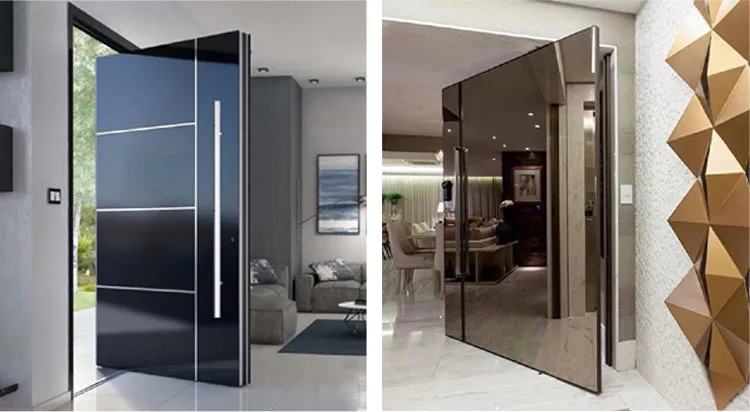
A steel entrance door is the rational choice when the primary requirement is resistance: to forced entry, to impact, to fire, or to a building that will be used hard for thirty years. It is the wrong choice when the primary requirement is warmth or a deep timber profile. The decision is usually made on the exposure and the threat model rather than on appearance.
The structural argument
Steel has a far higher strength-to-thickness ratio than timber or aluminum, so a steel leaf can deliver a given level of resistance in a thinner, stiffer panel. The rigidity matters as much as the strength: a stiff leaf does not rack, so the lock stays aligned and the gaskets stay in compression. On a door that is used a hundred times a day, that stability is what keeps it closing properly in year ten.
Where steel doors fail: the bottom and the fixings
Steel does not fail in the middle of the panel. It fails at the bottom edge, where water sits, and at the fixing points, where the coating is breached. Three details decide the outcome: a sill that drains outward and keeps the leaf clear of standing water; a factory-applied finish with proper pretreatment, including the cut edges; and stainless fixings that isolate the steel from any aluminum or masonry contact.
A galvanized or zinc-coated substrate with a powder coat over a conversion coating is the baseline for exterior use. On a coastal site, the specification has to go further, because salt spray attacks the cut edges and the lock mortice first, both of which receive less coating than the face.
Thermal performance needs a break
Steel conducts heat, and a steel door in a cold climate will show condensation on the interior face and around the frame unless there is a thermal break. A thermal-broken steel door with an insulated core addresses this; a plain steel door with an insulated core does not, because the core is bypassed by the frame. This is the single most common performance failure in steel entrance specification.
Security is the frame and the lock, not the panel
A heavy steel leaf in a soft frame is easier to defeat than a lighter leaf in a properly anchored frame. The frame should be steel or a reinforced aluminum section, anchored into the structural opening rather than into a stud wall with no blocking, with a strike plate that is itself reinforced and fixed through to the frame. A multipoint lock that engages the head and the sill as well as the lock side is worth more than a thicker panel.
Maintenance, honestly stated
A factory-finished steel door needs very little: wash it, check the sill and the bottom edge, touch in any scratch before it becomes a corrosion site. That is less than timber needs and about the same as a coated aluminum door. The one thing it cannot tolerate is being cut or drilled on site without the exposed edge being treated, because that edge is where rust starts.
We supply steel entrance doors with thermal-broken frames, multipoint locking and factory finishing. If you are specifying for a public building or a coastal site, send the exposure and the fire or security requirement and we will confirm the frame and fixing detail.
Need this checked against your project?
Send us your drawings or the code requirement — our engineers reply within 12 hours.