Inside Our QC: What Happens to Every Unit Before It Ships
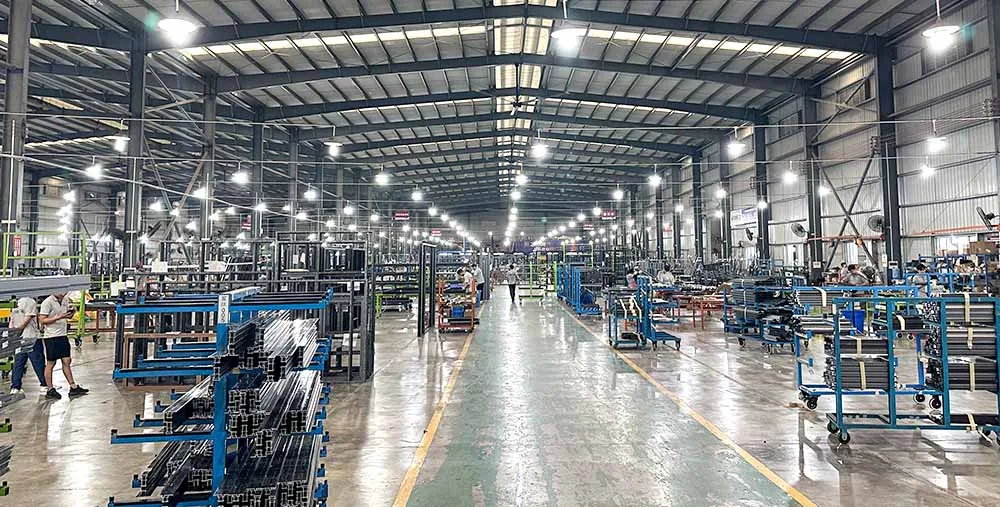
Quality control is easy to promise and hard to verify from a photograph. What a buyer can verify is whether the process is in one building, or split across five subcontractors where nobody owns the interface. Ours runs in-house, in this order.
The eight steps, in sequence
- Cutting — profiles cut on Italian saws against the approved shop drawing
- Punching and machining — drainage slots, hardware holes, corner preparation
- Glass sealing — insulating glass units assembled and sealed on automated lines
- Accessories — gaskets, hardware, screens and drainage components fitted
- Assembly — frame and sash assembled and squared, checked against dimensions
- QC — operation, alignment, seal and hardware check on every unit
- Packing — foam and film protection, crated for ocean freight
- Loading — container plan matched to the installation sequence
Why in-house matters more than the machine list
A glass failure is rarely a glass problem. It is usually a drainage, gasket or assembly problem that appears twelve months later. When every stage sits in the same factory, the people who assembled the unit are the same people who inspect it, and the feedback loop is short enough to fix a recurring issue mid-production instead of after the container lands.
Where third-party inspection fits
We welcome pre-shipment inspection by the buyer or a nominated agency. Our factory in Foshan is open to visits, and we can arrange a live video walkthrough of your order on the line if travelling is not practical. If an inspector finds something, we would rather hear it before loading than after.
What to ask for on your next order
- Photos of your units at the QC stage, before packing
- The container loading plan, so unloading matches your site sequence
- A named contact for after-sales, not a general inbox
Need this checked against your project?
Send us your drawings or the code requirement — our engineers reply within 12 hours.