
Windows and Doors for a Warehouse in Ghana
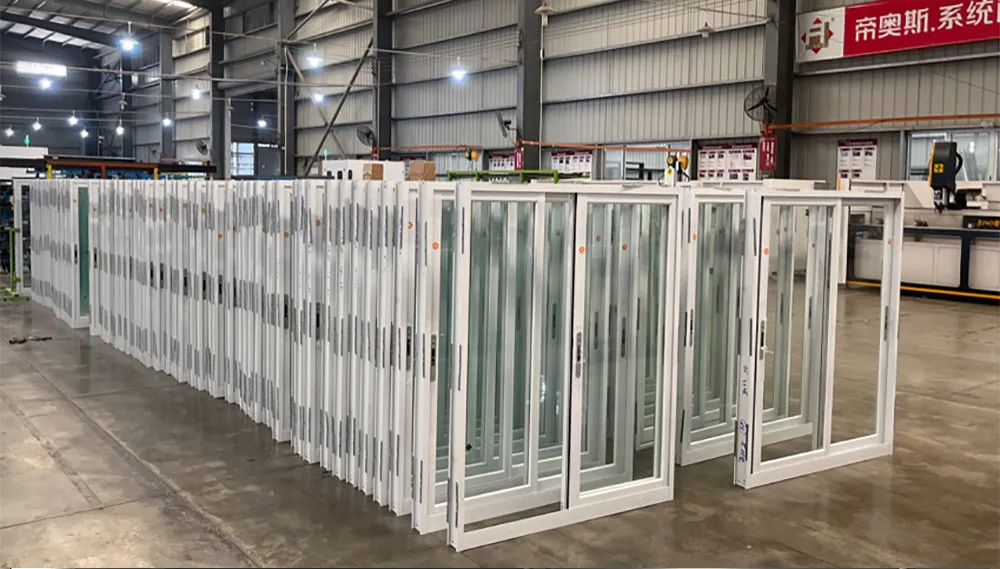
We shipped a fenestration package for a warehouse project in Ghana, and the specification looked nothing like a residential one. The building is not conditioned to comfort level, the priority is internal temperature control through ventilation rather than refrigeration, the dust load is high, and the driving rain arrives with the wet season rather than with a winter storm. Each of those changes a product decision.
Start with ventilation, not with glazing area
In a hot climate without full air conditioning, the largest determinant of internal comfort is air change, not U-factor. A warehouse wants operable area high on the wall for stack ventilation and low-level openings for incoming air, so that hot air leaves at the ridge and cooler air enters at the floor. That means the operable-to-fixed ratio in an industrial building is the opposite of a residential one: more operable area, positioned deliberately.
Dust is the design constraint
High dust load rules out large unfiltered openings in the working areas. The practical solution is a mix: louvered openings high on the wall for continuous ventilation without a direct path for dust, insect screens on the operable units, and sealed units where the space is used for storage that must stay clean. Louvers should have blades set to shed water and a bird screen behind them, and they must be removable for cleaning, because a blocked louver stops being a vent.
Rain performance matters more than thermal performance
In a tropical wet season, water is driven horizontally and often upward. The water tightness rating is the specification that matters, which points to compression-sealed operable units rather than sliders, and to deep drip details at the head. On a warehouse, the practical answer is often fixed glazing with sealed louver panels rather than large operable windows, because the louvers can ventilate in rain that would drive through an open sash.
Doors
Industrial doors are the wear item. Roller shutter or sectional doors at the loading bays, sized to the largest vehicle and specified with a wind lock if the bay faces the prevailing wind. Steel personnel doors with a corrosion-resistant finish and stainless fixings, set in steel frames that are anchored into the structure. Thresholds should be ramped rather than stepped, because a forklift will find every step.
Corrosion and finish
Coastal West Africa combines humidity with salt air in many locations. Aluminum does not rust, but it does corrode at cut edges and at fixings, and a standard powder coat can chalk. Specify a thicker film, a marine-grade pretreatment, and stainless fixings throughout. The cost difference is small against the cost of replacing hardware in five years.
What we actually shipped
Aluminum fixed glazing with sealed louver panels high on the walls, screened operable units at low level, steel personnel doors with corrosion-resistant finish, and roller shutters at the vehicle openings, packed by zone so the site could install zone by zone rather than opening the whole crate at once.
If you are specifying for an industrial or warehouse building in a hot or coastal climate, send the elevations and the process inside the building. The ventilation strategy and the dust requirement drive the fenestration more than the code does.
Need this checked against your project?
Send us your drawings or the code requirement — our engineers reply within 12 hours.