
U.S. Tariffs on Aluminum Windows and Doors: A Sourcing Guide
Every few months a buyer emails us a spreadsheet and asks the same question: is it still worth importing from China? The honest answer is that the question is badly framed. Tariff exposure is one line in a landed-cost model. Classification, certification and supply continuity decide the other lines, and they are the ones that sink projects.
Start with the code, not the country
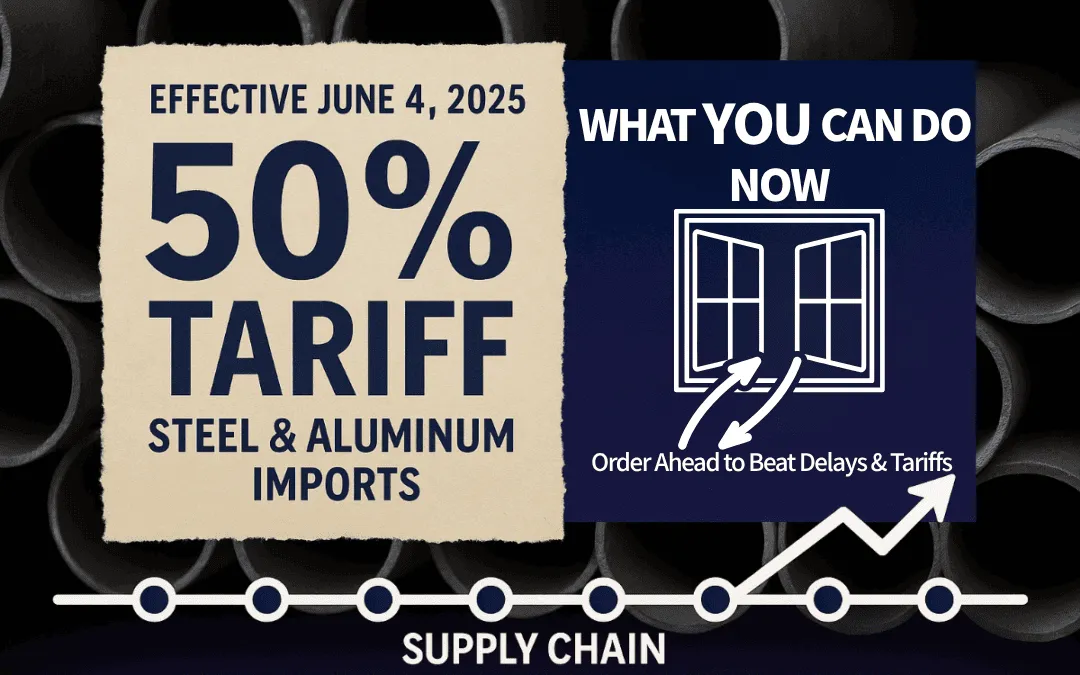
Aluminum windows and doors generally enter under HTS 761010. That heading does not settle the duty rate on its own. A finished window with an aluminum frame and insulating glass is assessed differently from aluminum extrusions, and a door assembly that includes steel components can touch more than one action at once. Section 232 measures on aluminum and steel are value-based and have been adjusted more than once since 2018, most recently through the June 2025 presidential action on aluminum and steel imports.
The practical consequence: any rate quoted to you without the HTS line, the country of origin and the aluminum content stated is a guess. Ask your broker to model the entry before you commit to a container, not after it lands.
Where U.S. supply actually comes from
Canada and Mexico have been the volume leaders for years, helped by proximity and by USMCA treatment. China supplies a large share of the value-engineered segment. European producers such as Poland, Italy and Germany compete at the top of the price range. What changed is not the ranking; it is the administrative friction. USMCA treatment is no longer automatic in practice, and documentation errors that used to pass are now the most common cause of delayed releases.
UK-origin material has become a lower-duty route for some buyers, but volume is thin and lead times are long. It is a niche, not a strategy.
The bottleneck nobody prices in: certification
NFRC certification is not a marketing badge. In most U.S. jurisdictions it is the only accepted evidence that a fenestration product meets the energy code, and code officials check labels. The number of countries with a deep bench of NFRC-certified window and door manufacturers is small: the United States, Canada, Mexico, Italy, Germany and China. No Southeast Asian supplier base currently offers it at scale.
This is where the cheaper-sourcing reflex breaks down. Moving an order to Vietnam or Malaysia to dodge a duty line usually means giving up the test reports the project needs to pass inspection. Certification takes time, costs real money, and cannot be retrofitted onto a shipment already at sea. Italy and Germany clear the certification bar comfortably and then charge for it, in material, labor and freight.
What a sourcing decision should weigh
Four variables, in this order:
- Landed cost per opening, not unit price per square meter. Freight, duty, brokerage, port fees and inland delivery routinely move the number by 15 to 30 percent.
- Compliance evidence. NFRC label, AAMA or equivalent structural test reports, and a supplier who can produce them per project rather than per brochure.
- Schedule tolerance. A 30-day saving in production that costs 3 weeks in customs is a loss.
- Change responsiveness. Tariffs move; drawings change; sites measure wrong. The supplier who can re-cut a frame in two weeks is worth a premium.
Four things to do this quarter
- Pull every 2026 project off the board and list the fenestration scope by system, size and performance class. Most tariff surprises come from a product you forgot was in the package.
- Request updated price files and freight indications for the next two quarters. A quote older than 90 days is a historical document.
- Confirm the HTS classification and origin documentation your broker will actually file, in writing.
- Ask each shortlisted supplier for the specific NFRC certified product directory entries that cover the systems you are buying.
Volatility is not going away. What you can control is how much of it reaches your schedule. If you are reworking a 2026 package and want the cost structure and certification position of a specific system laid out before you bid, send us the schedule and we will answer in writing.
Need this checked against your project?
Send us your drawings or the code requirement — our engineers reply within 12 hours.